open source · end-to-end encrypted · self-hosted · white-label
Messaging your organization can own.
Xoyo is a WhatsApp-class messenger you run on your own servers, under your own name, with encryption that ends on your people’s devices. It’s built on the Matrix protocol, ships as web and mobile apps, and bridges into Glific so the programs you already run over chat keep running.
Apache-2.0. Self-host it yourself, or let us run it for you.
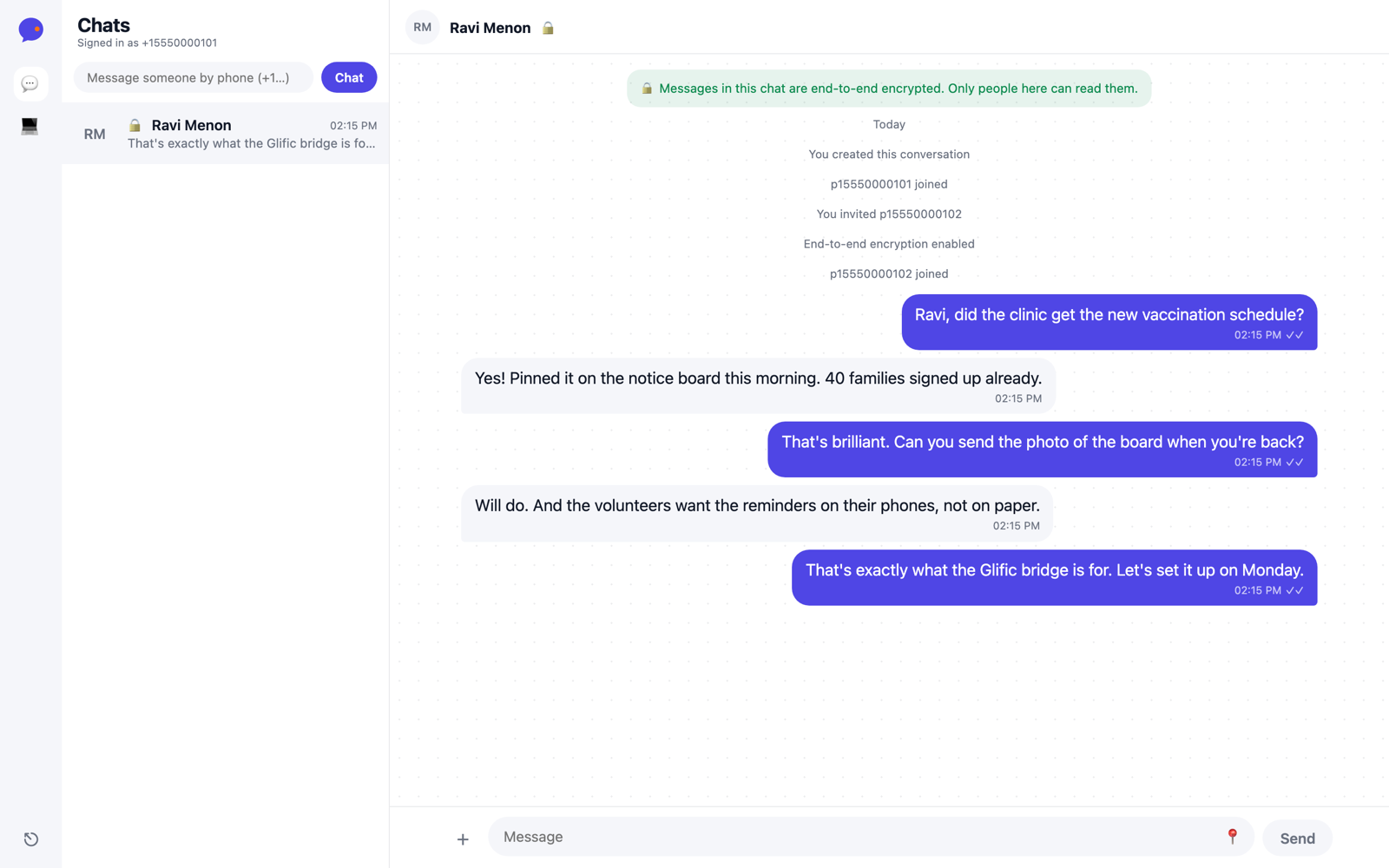
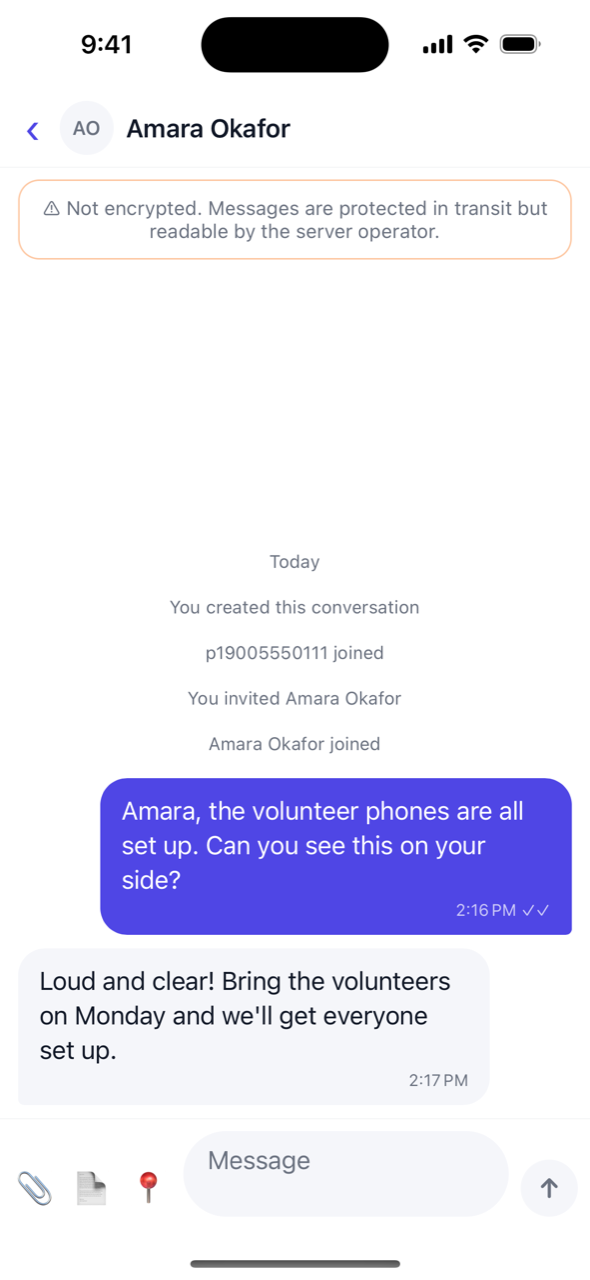
Real screens, captured 3 September 2026 from the development build. The header dots re-brand this page live — the apps read the same tokens.
the honest part
The app tells you exactly how private each conversation is.
Most messengers say “encrypted” once and never again. Xoyo labels every room with one of three states, and the label is enforced by the architecture, not by marketing copy. When a room is bridged to an organization’s system, the app says so, in amber, every time.
Between people
Direct conversations between Xoyo users. Only the devices in the room hold the keys; the server stores ciphertext and nothing else.
With an organization
A conversation routed to a Glific-connected organization. Encryption ends at the bridge so the organization can read and reply. You consent to this once, at signup, and the room is labeled forever.
Where a device can’t encrypt yet
Today that is a conversation started from the mobile app, whose device encryption is the next thing we ship. The app says it plainly rather than hiding it.
who it’s for
Built for people who run things over chat.
NGOs and programs
You reach beneficiaries on WhatsApp through Glific today. Xoyo gives those same flows, templates and reminders a channel you own, with no per-message platform fees and no policy surprises.
Community organizations
Cooperatives, unions, schools, faith groups. A private network for your members under your name, hosted where your data is allowed to live.
Companies and networks
Field teams, franchises, member networks. One codebase, your brand on the icon, your servers behind it, encryption you can audit.
Integrators and hosts
Ship branded messengers for your own clients from the same codebase. The white-label layer is a typed config, not a fork.
for organizations
Keep Glific. Change the channel.
The Xoyo bridge speaks the same HTTP contract Glific already uses for WhatsApp providers: send, template send, template discovery, signed webhooks, the 24-hour session window, interactive replies. Your flows don’t change. Your costs and your dependence on a single platform do.
# the same call shape your Glific flows make today
POST /v1/msg
Authorization: Bearer <org api key>

{"channel":"xoyo","source":"919876543210",
 "destination":"919812345678",
 "message":{"type":"text","text":"Your clinic visit is Monday at 9."}}

# every inbound event arrives HMAC-signed
X-Xoyo-Signature: v0=…  X-Xoyo-Timestamp: 1756900000
where it stands
Real, and precise about what’s next.
The server, both clients and the bridge are built and tested. The roadmap shows every remaining piece by its task id, with nothing rounded up. Two things we say out loud: mobile device encryption is the next tier of work, and calls are a fast-follower, not launch scope.
Start a conversation.
Tell us what you run over chat today. We’ll tell you, honestly, whether Xoyo is ready for it and what a pilot would look like.